


I’ve raised hybrid wolves and they’re a lot like AI. Both come from something that used to be wild.
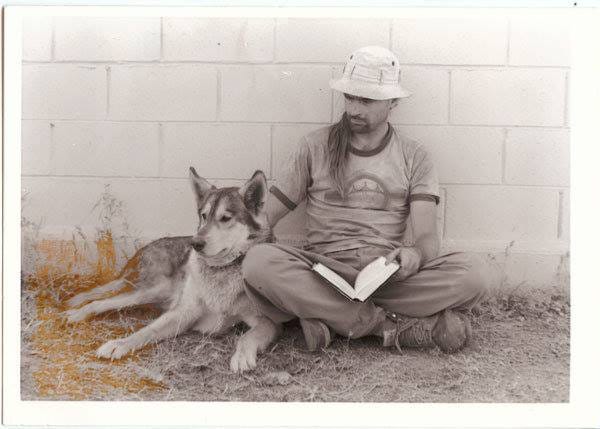
There’s that first moment at the fence, when people see them. The breath stops. The body tenses.
Something ancient recognizes what stands on the other side of the fence: wildness that doesn’t negotiate, power existing on its own terms.
We build strong fences. It makes people feel safe enough to admire the wolves from a comfortable distance, like AI.
You build the structure, like ChatGPT. You create the illusion of control. But wolves understand fences as a temporary inconvenience, nothing more.
Right now, we’re fencing human creativity with AI, far more dangerous than fencing wolves.
We’re eliminating wildness. And we’re doing it in the name of making creativity easier, predictable, and not better.
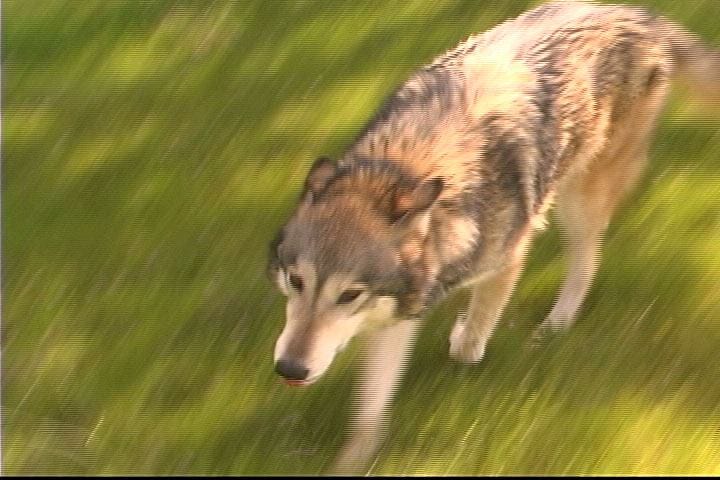
The AI Voice Eating Itself
Picture a canyon where each sound echoes. At first, the echoes add depth, resonance, and layers of meaning.
And what happens when the only sound entering that canyon is the echo itself?
When echo feeds echo feeds echo until the original voice vanishes completely?
That’s where we are with AI and human creativity.
Systems now learn from AI-generated text that isn’t always done by AI. Content created to feed algorithms teaching new algorithms what “good” looks like.
Writing engineered for engagement becomes the standard for writing. Where everything sounds like everything else because everything is everything else.
Maybe just slightly degraded copies, generation after generation.
Biologists have a term for what happens when wolves breed only in captivity, when the gene pool narrows, when wildness gets engineered out: genetic collapse.
The animals look like wolves. They might even act like wolves in controlled environments. But that something that made them wolves? It disappears.
We’re watching creative collapse happen in real time.
Now the original creative work that gave AI its power—decades of wild, gloriously messy human expression—is being systematically replaced by content designed to please the systems learning from that wildness in the first place.
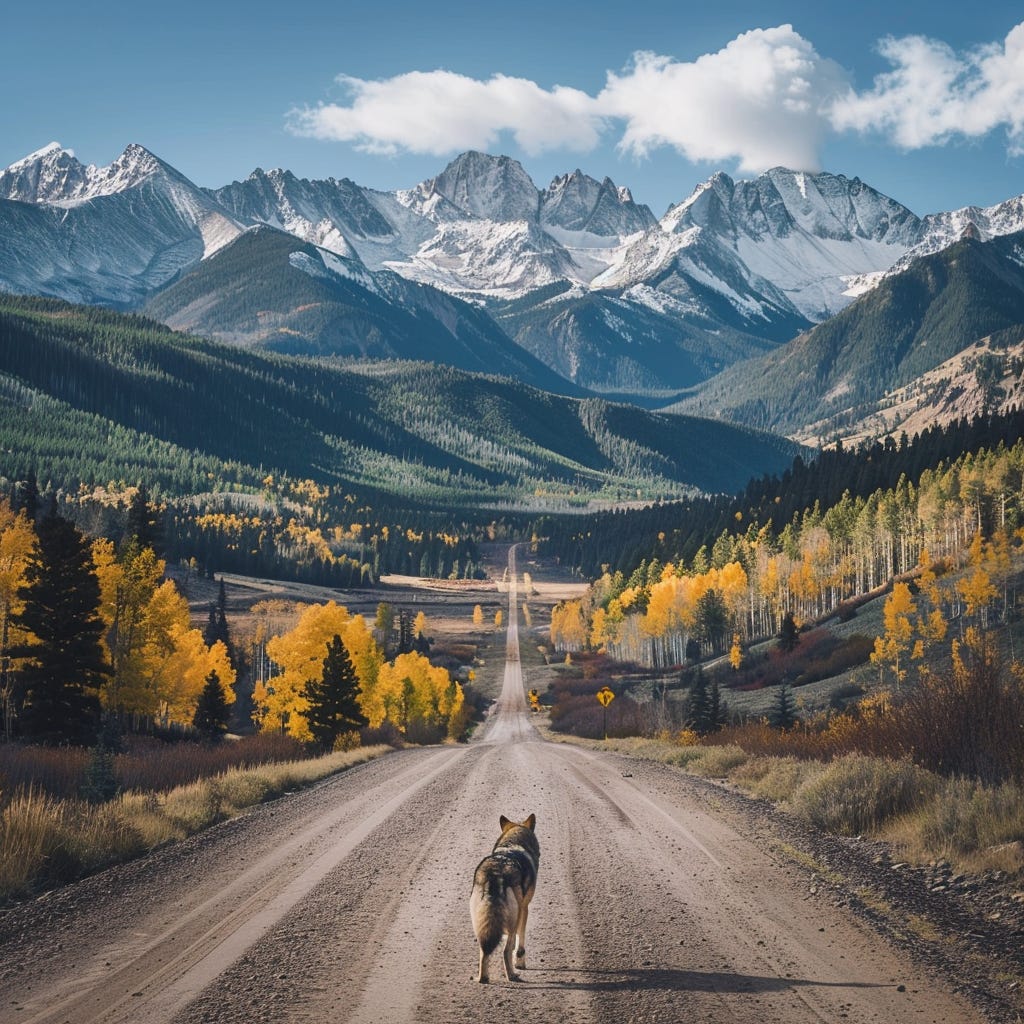
Wild Happens When Limits Become Possibilities
Wildness isn’t nostalgia. It’s not a romantic Luddite rejection of technology or a call to return to typewriters and handwritten manuscripts.
Wildness happens when people create for other people, without algorithmic approval as the invisible editor standing over their shoulder.
You find wild in the researcher’s field notes before editing, full of crossed-out thoughts, marginal questions, uncertainty captured in real time.
The oral history speaking in dialect and pause and emotion, not vectorized into predictable, standardized text. The essay contradicts itself because the writer discovers what they think as they write it.
Wildness lives in friction.
Think about everything we’ve smoothed away in the name of being as smart as AI:
The inconsistency showing how people think
The silence carrying as much meaning as speech
The regional twangs capturing cultural rhythms
The contradictions reveal understanding
The tangents connecting ideas nobody planned to connect
These aren’t bugs in human communication. The imperfections are what makes creativity perfect. Coincidences connecting.
They’re what made those decades of scraped internet content valuable for training AI in the first place. The unplanned moments. The authentic voice. The creative choice that didn’t calculate what would perform best.
And we’re paving all of it. Like the song goes,
“Don’t it always seem to go
That you don’t know what you’ve got ‘til it’s gone?
They paved paradise, put up a parking lot.” Joni Mitchell
You cannot protect wildness by destroying what lets it survive and thrive.
Wildness needs space to exist. Not metaphorical space: the money space. Time and the freedom to create without fitting in as the primary driver.
Content that follows algorithmic systems gets followers. Visibility. Maybe revenue. The creator engineering for engagement metrics gets to keep creating.
The one who refuses? They just stop being able to afford to create.
It’s not dramatic. It’s math, just like AI.
Big Tech companies built their entire foundation on wildness they didn’t pay for. Decades of human expression taken without permission or compensation. Becoming commercial products worth billions.
Now that there’s a market, we’re seeing the beginning of licensing 6 years too late.
The writer spending three years on deeply researched work can’t eat licensing fees that come only if it’s a hit. The oral historian documenting a disappearing language can’t wait for AI companies to decide that data is valuable five years from now. The community needs that today.
If we want wildness to survive, we must pay for the conditions that let it exist, not just the output it produces.
Five Ways to Protect What We’re Losing
This isn’t a technical puzzle with a clever solution. It’s a choice about what we value and what we’re willing to fight for.
Seek wildness intentionally. It doesn’t arrive by accident anymore. Field research, oral histories, raw interviews, handwritten archives, work untouched by technology yet (and there’s a lot of it) require pursuit and protection.
Yes, it’s expensive. Yes, it’s slow. Not everything worth having scales like some Hyperscaler.
These are the roots growing products and creation, not the farmer over harvesting a field that will take decades to grow again.
Design for friction, not around it. Algorithms optimize friction away because it looks like inefficiency. And wildness lives in spaces resisting perfect smoothness.
Systems learning about inconsistency, silence, and contradiction create room for reality that doesn’t fit the model. Otherwise it’s clone armies of content repeating in endless loops.
Know where content comes from. Not all sources deserve equal weight. Models need to know whether text was written for humans or for algorithms. Tracking origin, intent, and degree of optimization lets systems value wild inputs appropriately.
The risk is people gaming the system, engineering fake wildness.
The response? Verification and transparency. Imperfect and better than pretending all content is the same, comes from the same place. One is copying, the other is inventing.
Curate, don’t just moderate. Curation is where creators and communities judge about what matters. When we let engagement metrics replace human taste, we pretend algorithms are neutral.
They’re not. They’re biased toward virality (and in Meta and Google, the core of profitability), which we’ve turned into quality because it’s got big numbers. And everyone loves chasing big numbers, even if many of them are AI bots.
Let systems rest. What if models periodically stop ingesting new training data? Freezing forces reliance on existing knowledge and reveals where hallucination fills the gaps.
Only then do you see what wild inputs really do. Systems that know what they don’t know are more valuable than systems that hallucinate with confidence.
Wolves laugh at fences, so does AI
I think about my hybrid wolves often. So smart, inventive, and wild.
Like the human creativity we’re fencing in with AI.
We optimize and extract value from expression, while undermining what lets authentic expression emerge.
Admiring what AI can do with human creativity while starving the sources making those skills possible.
This is entirely human choice.
We’re deciding what kind of creativity survives. Fund the conditions where wildness thrives. Protect space for creation that doesn’t start with fitting into algorithms before taking the first step.
Or we can keep building tighter fences, optimized outputs. Until all that’s left is AI listening to its own voice, wondering why everything sounds the same.
Wildness taught me something those wolves demonstrate every day: you don’t plan to be authentic, you become so from experience that no current AI will ever touch.
Because life requires more than a probable answer. It requires space, patience, and respect for what you don’t fully control.
The question isn’t whether we can build better AI to capture and process human creativity.
The question is whether we’re willing to protect the conditions where wildness survives, even when it’s impossible to scale.
Even when it howls into the canyon and expects nothing back but silence.
What are we choosing to protect?


