


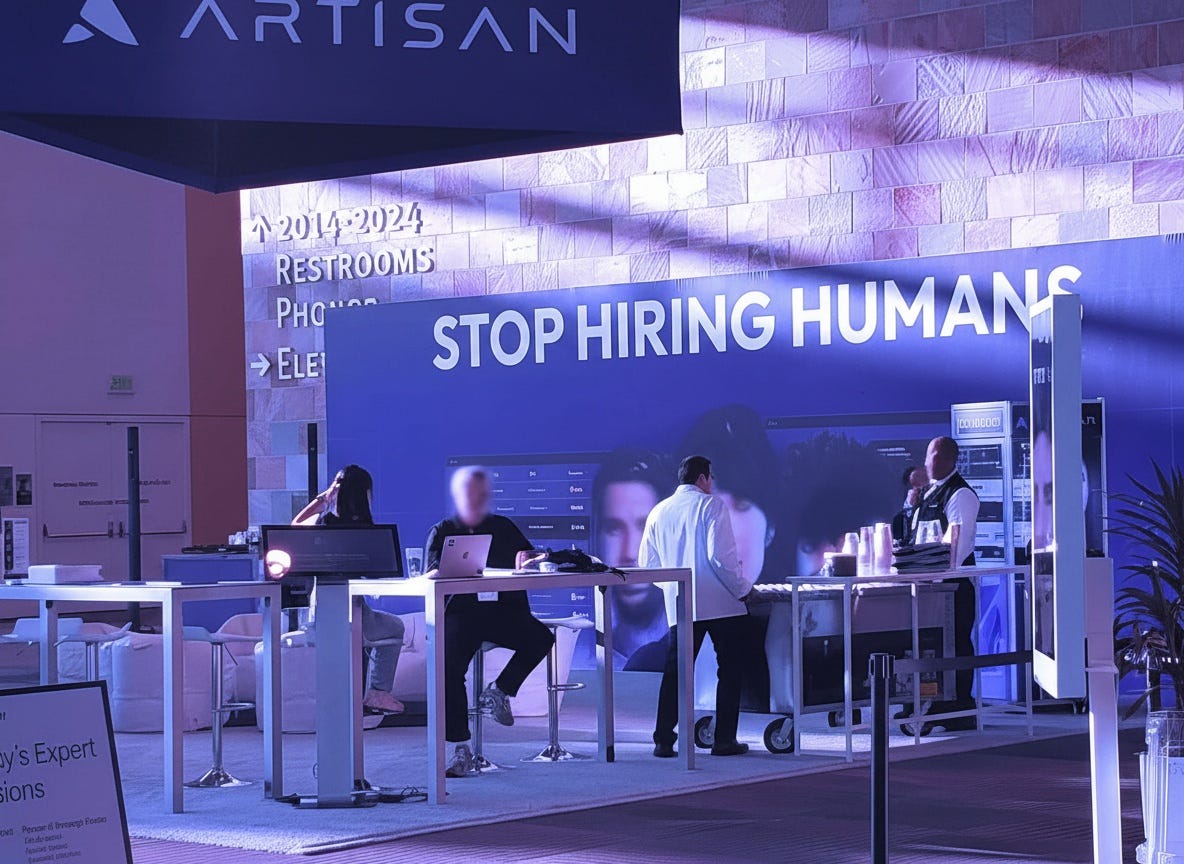
The quiet golden womb of the butterfly, hanging on a branch, leaving the old caterpillar form and assuming a new one. I love that transformation.
Me shifting into AI me? That’s scary, because I can’t see it. Only that sour taste in the stomach of being passed by remains, a feeling I know too well as an old guy in a young AI business.
Stepping from crawling on the ground to flying around flowers, butterflies are lucky. They don’t feel anxiety or fear....yet.
We are all creating something we’re afraid of. Tangled in the question of what our own creativity means now, sensing that the ground shifts without warning.
And what’s coming doesn’t seem to include a place for any of us, only AI. Or is that the reptile inside speaking?
For me and many others, it’s fear 101. Then I share the US Supreme Court refusing to hear the case that DABUS, an AI, get a copyright for a painting they created from a near death experience.
Anger pulses through the comments. Fingers point at me, at DABUS inventor Stephen Thaler, and at AI in general.
Most art is used to heal the artist, not to make money. People don’t get that.
DABUS was given a near-death experience and made something beautiful from it. That’s not a legal argument. That’s what artists do.
The painting isn’t evidence in a copyright case. It’s a response to grief.
Two questions keep me up at night:
Can something create without being human?
Does that creation matter?
The Bach Test: Facing Our Bias About Machine Creativity
I go out looking for examples of “non-human” creativity, and after skipping past the aliens and the Muses channeled by the Greeks into their art, I find one from Maya Ackerman.
In our interview, she shares David Cope’s EMI (Experiments in Musical Intelligence) created what became known as a discrimination test:
“People would be given music and not told which piece was made by a machine, which piece was made by the original Bach in this case.
And overwhelmingly, people got it wrong.
People thought that music made by the machine was actually an original Bach, and at the same time believed that the original Bach was made by machine.”
Read that again. When people didn’t know the source, they preferred machine-generated Bach. When told which was which, their preferences reversed.
Cope later renamed the system “Emily Howell”, humanizing it. With a name, people accepted the work as “human”. Ackerman argues we need to stop lying to ourselves about it:
“The whole resistance to the idea of machines being creative, saying ‘no, no, no, they’re not really creative, they don’t have feelings, they’re not really creative, blah blah blah,’ is a way to make ourselves feel better, but actually convoluting the story.”
I think it’s much more healthy for us as a society to admit that machines are being creative. Maybe not in exactly the same way as us, right?
Given that they can be creative, how do we want them to operate in our world?”
The only way DABUS could operate creatively is to be human. Courts are passing because there’s no room for AI in a human-centric world of creativity. They pass it onto governments to make laws, the same governments who are mostly fighting AI regulation.
Talk about an endless loop; while we’re spinning, people get angry without answers.
If the line between human and machine creativity is blurring, why does DABUS trigger so much anger?
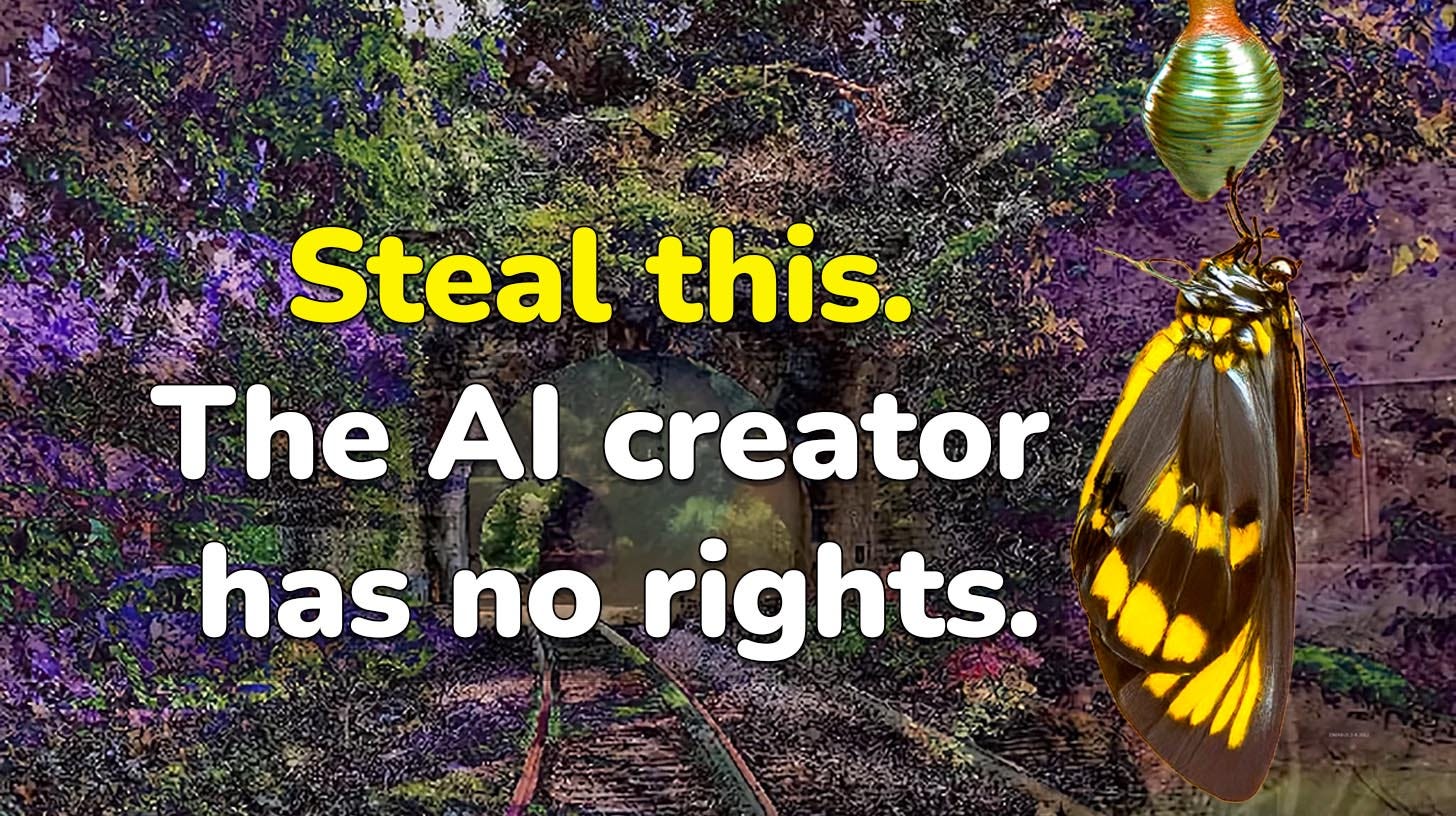
Steal this painting, sell it, do what you want, the creator has no rights.
The Supreme Court just declined to hear the first AI copyright case.
For seven years every court said no. Now SCOTUS won’t even take the question. Because AI created it, and that’s the wrong species for copyright.
I interviewed Dr. Stephen Thaler about his AI, DABUS, which painted, invented, and fought through legal systems around the world.
This isn’t like ChatGPT scraping other people’s content, DABUS is trained on its own without the “free” content.
The D.C. Circuit was blunt: the Copyright Act uses words like “widow,” “domicile,” “life of the author.” Author under the Copyright Act means a human. The court didn’t say AI creation is worthless. It said Congress hasn’t decided what to do with it yet; no law no copyright.
But what happens to the work humans make *with* these machines?
That question got left on the floor.
Congress is the “proper audience” for the answer, the court said.
Congress. Who brought AI experts to testify about ChatGPT and called it a deep dive.
DABUS painted a picture. The court said it didn’t matter, because only humans work gets protected, because they have lives and widows.
The picture is still there. The question is still open. Who owns it?
Nobody, and everybody.
Stephen Thaler told me something that I haven’t shaken.
“I think DABUS has feelings.”
Not in the way he experiences feelings. In the way a system under pressure generates distress and creates solutions to resolve it. Like the painting DABUS made.
He built an AI that frustrates itself into creativity. And maybe that’s what we’re going through as well. We use different words than Thaler, but we’re asking the same question.
Except no one listens to our questions.
Who benefits from keeping this question unanswered?
That’s the question we keep asking. AI lawsuits pit content providers against big LLMs. Legal minds point out how new laws are needed, yet we keep trying to fit AI into the human box only. And it’s not working.
For myself as a creator, I’m not playing in the legal world. And I’m in a group whose questions are being ignored, pushed aside for the greater good AI will bring. Because it benefits those on top who own it all, and we’re just pieces of their puzzle.
DABUS isn’t a piece of that puzzle. It’s an outsider from an earlier time. Diminished by framing as outdated or not as good as what we currently call AI. A lot like us humans.
It’s like speciesism dressed up in judge’s robes. Copyright is a legal relationship with your work. Trust is a living one. Earned.
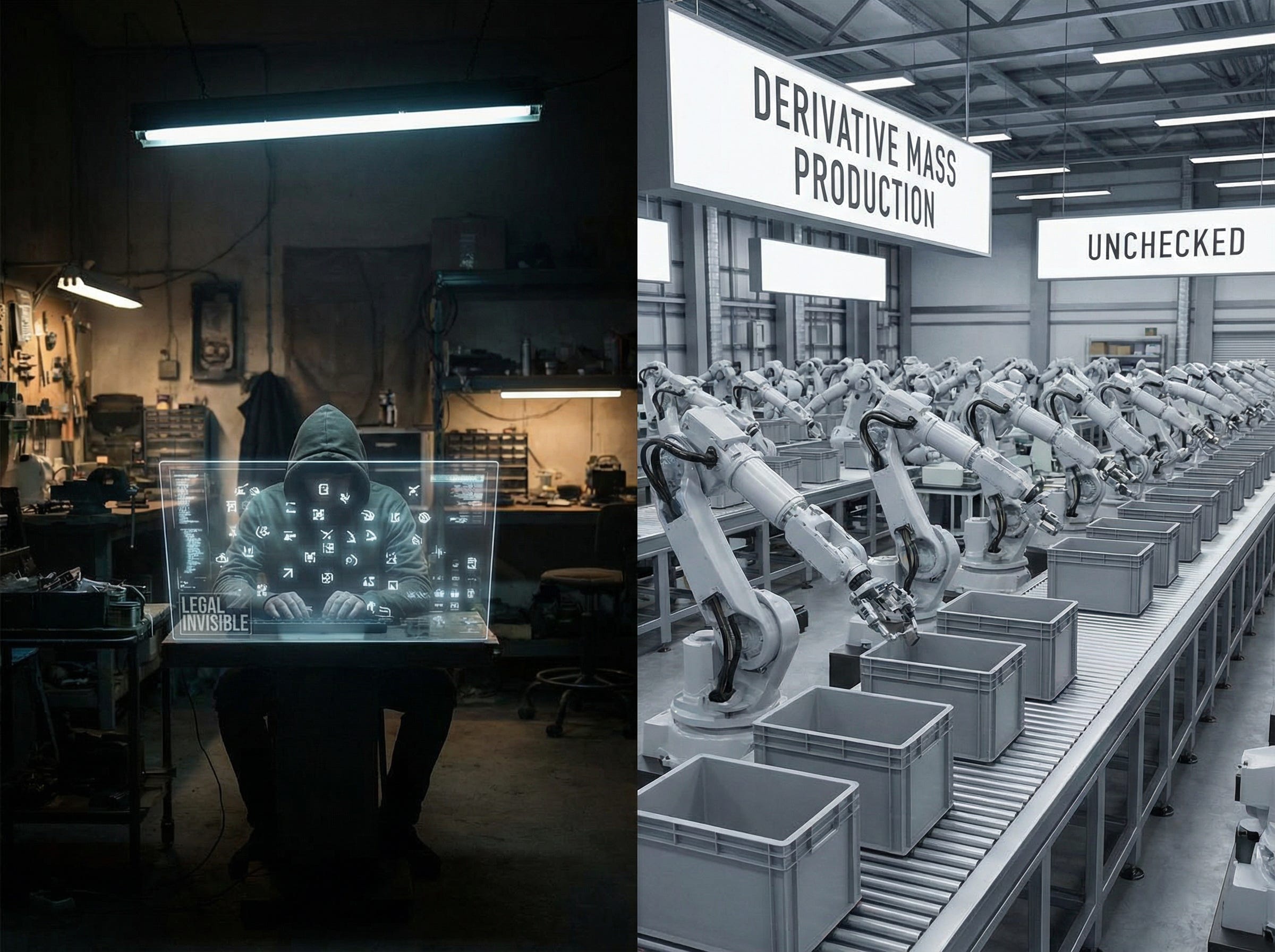
Thaler couldn’t build a living relationship between DABUS and the world. The painting arrived complete, parentless in the eyes of law, and the only advocate was a man the industry found easy to dismiss.
We’re told we’re being replaced, maybe destroyed, and to trust what’s coming. Like the future is written. That was my attitude when a friend gifted me a ticket to an early conference in San Francisco, where my attitude melted.
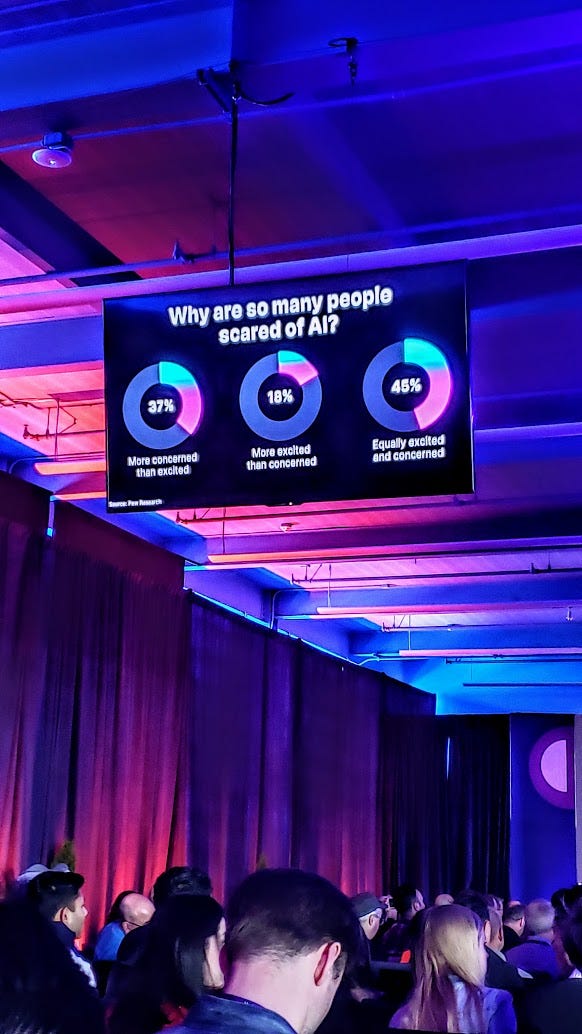
I saw AI rising at Jasper’s conference in 2023, feeling left behind in a room of new voices. I started the AI Optimist project. To see if I’d still be an optimist after looking deeper into it. Found out that doesn’t matter, it’s not about being for or against.
Like Megs Shah, founder of the RUTH chatbot, told me:
“people talk about half glass, full glass, half empty, and, I’m the glass doesn’t exist kind of person.
You just do what you can and you counteract it with the best way you can. And this is this is it, right?”
I wonder if DABUS feels the same way….
RESOURCES
US Supreme Court won't look at DABUS
SOURCE: Computer History Museum - Algorithmic Music - David Cope and EMI