


When Sierra Hull’s mandolin made the old Felton Music Hall near Santa Cruz hum, I could feel everything tingle. From my head to the tips of my fingers, the gap between the audience and the music filled with sweet bluegrass.
Now when I revisit those songs on Spotify, memory becomes feeling. I listen again. Not to go back in time, to be with that song now.
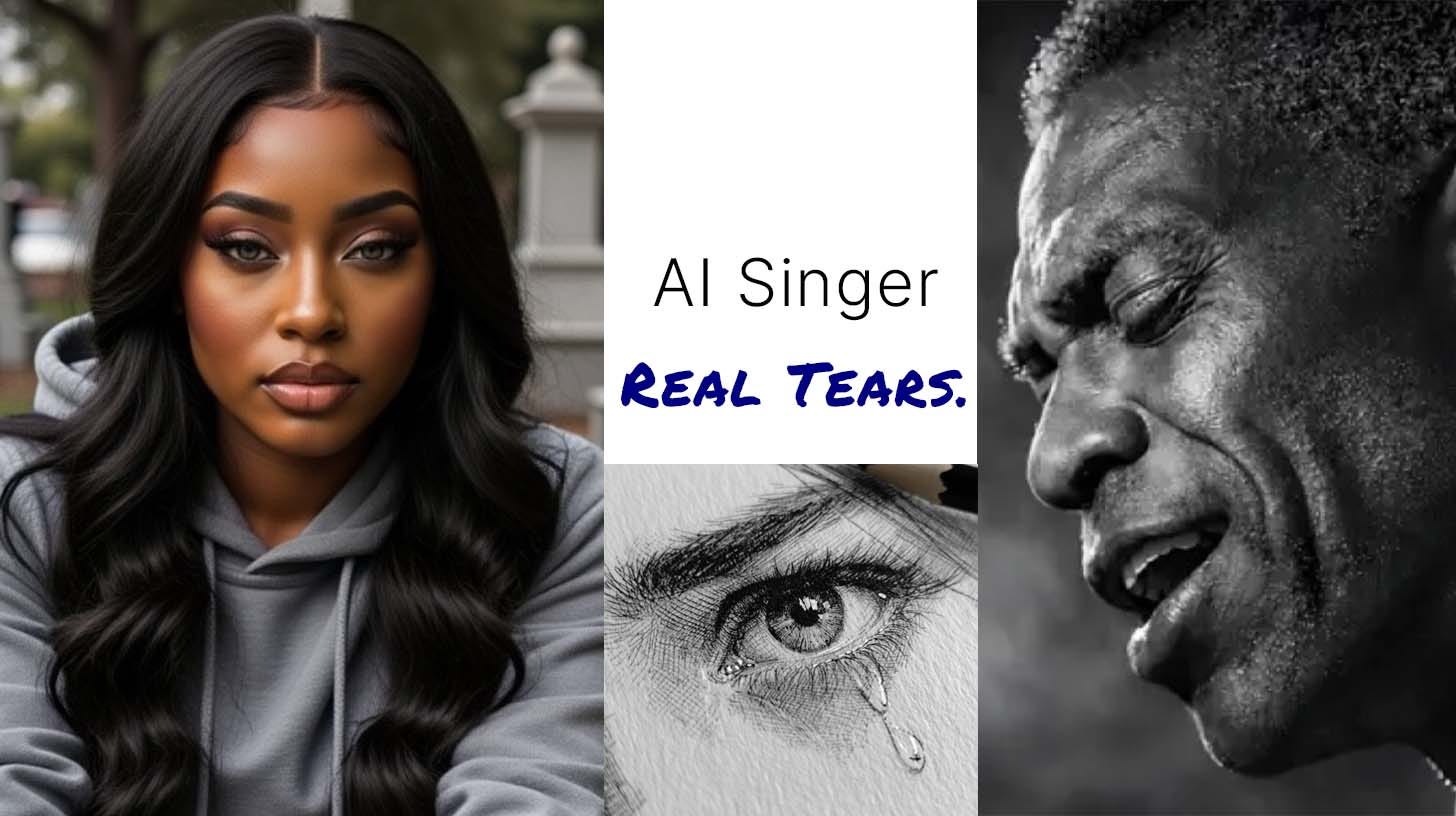
Something I share with the fans of Xania Monet, who will never see her in concert, because she, and her music, are AI - except the words. And the 5,661 comments I saw bonding around the words, the moment, and the way a good song turns a swarm of people into a shared group.
They say AI can’t make you emotional or have emotions. Tell those commenters.
It makes me wonder what happens to working musicians when the audience discovers it doesn’t need them to feel what an AI song gives them?
Testifying with Xania Monet
Xania’s followers listened and found her AI song Let Go, Let God as a place to bear witness, to share and connect, feelings rising like this:
“First time hearing this song it had me crying my eyes out stood in my kitchen, this song is something special.”
“Who else is here crying from pain but this song provides peace”
“I cried the first time I heard this and I did let go”
Her words are the difference. AI is the instrument, not the artist. “Music poetry” is what I felt. Without Suno, the words would have lived only on the page, not in our ears.
Their Felton moment was first hearing the song, and witnessing where they are now. Poet Telisha “Nikki” Jones wrote lyrics, blended them through Suno, and created songs. The music is AI, the words human and poetic.
Because a poet’s words sung by a voice that doesn’t exist turned out to have real emotional value. The kind that sparks people.
She’s not alone as an AI singer. Few get that passionate reaction, or recognition. Much less payment, or respect.
Xania got Billboard’s attention before receiving $3 million from a label. A poet’s voice rose with Suno’s help.
They Keep Silent Singing Eddie Dalton’s “Another Day Old”
When I first heard Eddie Dalton sing, that smooth patient BB King sound I love rose from this music. Not a copy - AI but good - a style connected to my love of blues. Then I read the comments, bonding instead of trolling: these must be fake AI, right?
“First time we heard this song. We never heard of this singer before. But, we are captivated. The lyrics are true to life, but what a voice.”
“Beautiful. Not everyone gets to get old, appreciate every day.”
“I just found out this is AI, but I hope the lyrics came from a real person. “
This audience largely can’t go to concerts. They’re 60, 80, 89 years old, managing diabetes and kidney disease and cancer recovery. They found this on a Facebook reel.
For them, the music came to where they already were, sounding like what they already loved, saying things they needed to hear. That’s not deception, and it’s also by design.
Dallas Little is a creator who has been testing AI music and singers. Eddie Dalton is one of the latest on Little’s label, Crunchy Records. He previously created Biscuit Beats, with country, AI Trump parodies, and shock comedy mixes. He also created Solomon Ray, who was in the gospel charts in late 2025.
He’s an operator and creator, who broke through because the lyrics, music, and audience targeting blend into something memorable for his listeners.
I read many articles attacking Little as a content farm creator. I see someone who understood an audience deeply enough to build a voice, a visual identity with lyrics that land, and find the right people who care the most for Eddie Dalton’s music.
Maybe we’re less scared of losing musicians and more scared of what’s coming. Music with this kind of intelligence is its own form of art.
Until it’s used to take someone else’s work, name, and YouTube pay, like Murphy Campbell.
AI Tries to Steal Murphy Campbell’s Music and Identity
Murphy sings and plays traditional folk music on her banjo on YouTube with 42,000 followers for her music. Then one day YouTube emails her, saying she’s got copyright claims against her channel. Because she doesn’t own the rights to her own music.
Someone else is getting paid for her sound and songs, under her name. They download her YouTube videos and upload their AI versions, and copyright them with her name. Ouch.
Real folk musician, real voice, cloned by a bad actor who was naive enough to contact her: they almost shut down her ad revenue. Her Instagram audience rallied, Vidya and YouTube took the clone down within a week. She owns her work again.
Her audience knew her and loved her music. Both Xania’s and Eddie Dalton’s audiences have no one to defend because there’s no one to know. And anti-AI folks will note that the sources of their music will never be known, since those songs were vacuumed up like crumbs on a floor, and rearranged in AI.
Now a smarter thief would have never notified Murphy and just created a different name. How would she ever find out?
It’s hard for us all to tell the difference.

Musicians feel threatened by AI music, AND don’t know if it’s AI.
In a survey, 97% of Deezer users comparing two songs couldn’t tell the difference between AI music and music generated by people. They want to reject AI music, but they can’t tell when they’re listening to it.
Music is the thing that gives people permission to feel, out loud, dancing with strangers in a room or sharing love on social media.
And it turns out the permission doesn’t require a heartbeat behind it. Unless you want the complete Felton live vibe we felt. YouTube isn’t live, but the comments are real, the feelings are real.
A poet who didn’t sing found a voice through AI. The voice found an audience that felt every word.
Marvelous, Declan!