


Before last week, I never heard of Khaby Lame. Then the headline:
A $975 Million Deal Will Turn This TikToker Into an AI‑Powered, Multilingual Content Machine
Whoah, the creator in me wants to believe!
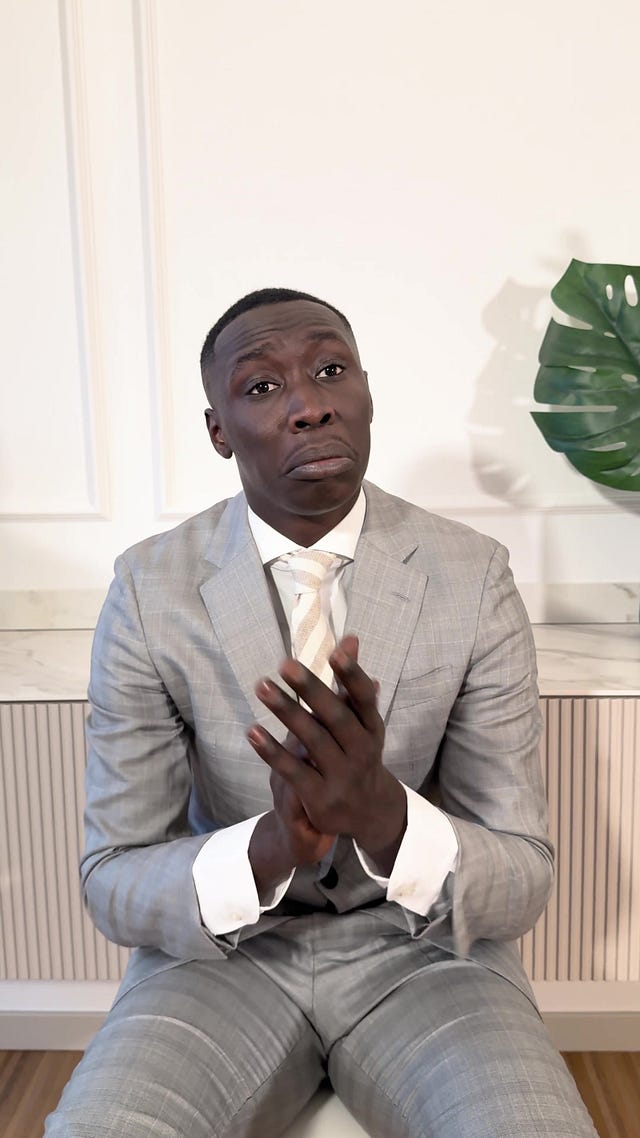
Six years ago, he was unemployed in a Turin factory after COVID layoffs. He started making TikTok videos, like a silent mockery of overcomplicated life hacks. Like Buster Keaton, the silent film comedian, for the AI age: sardonic facial expressions, no words needed.
 Tiktok failed to load.
Enable 3rd party cookies or use another browser
The algorithm loved it. 161 million followers later, he became TikTok’s most-followed person
Soon he will become the product with AI Cloning. Let’s get Khaby surfing, or shopping for an iPhone or Samsung (whoever pays better). Whatever you want, AI Khaby delivers. Always available.
AI Makes You Better at Something That Doesn't Matter

Furiously pushing those furry brown feet faster, making the golden wheel blur. What’s the difference between the wheel and the hamster? Both stay in the same place, while moving. Bored or stressed, hamsters seriously love the wheel.
So I’m hoping he got paid, at least a percentage upfront. Whoops, the deal looks like all stock.
From a Hong Kong company making less than $10 million a year. The stock surged 650% on announcement, then crashed.
Is it real money or a PR stunt? Nobody knows. We’re watching the experiment roll out in real time. What I do know is that it’s classic AI Age hype; pump it up and dump it if it doesn’t work!
The AI Map and the Wilderness
There’s a map now for algorithmic fame. Khaby follows it perfectly.
Identify what’s trending. Life hack videos everywhere. Spot the gap—these videos are ridiculously overcomplicated. That’s your angle.
React with content the platform loves. Silent mockery. No language barriers. Short videos designed how TikTok’s recommendation engine wants to consume them. Visual, universal, and emotionally clear.
Repeat. Keep doing what works until the algorithm notices. When it does, do more.
161 million followers and billions of views. The audience gives him leverage. The format gives him clonability.
This isn’t the usual wilderness creativity, of unpredictable spontaneity born from imagination and often from trauma.
He did lose his job during COVID, and oddly that probably helped him keep it authentic.
Over time and repeat videos, Khaby learns what TikTok rewards and delivers exactly that. And it might make him a near-billionaire. But is it real?
The buyers aren’t betting on unmeasurable charisma. They’re acquiring proven data patterns.
The rest of us? We’re in the wilderness. Our words feed language models. Our images train vision systems. Our creative patterns become training data for the tools everyone uses.
This is a system existing way before AI; many forget that Apple’s iTunes and Spotify buried musician’s income so low, now you must tour endlessly to make a living.
People are listening to AI Songs on Spotify right now and can’t tell the difference.
Every breakthrough leaves someone behind. Who benefits? Who gets heard?
And why are only academics, government, and Big Tech involved in the discussion?
Mostly because it’s their job. The rest of us investigate this between creating and life’s busyness.
This one’s for all the creators building, not doing what the algorithm asks them to, like I did.
Khaby’s Deal and Why My Year of Playing the AI Game is Over
I’ve spent two years writing as an AI researcher, focusing on big issues before landing on AI Copyright and Creative Rights. Predicting the AI crash, while citing Sequoia and Baidu. Going to TechCrunch Disrupt and winning the SAAS/Productivity pitch with Omadeus.
We won because it was a 2-minute pitch, broken down to fit Techcrunch Disrupt’s guidance for founders. We followed the rules.
That’s following the map. And I applied the same map to my work here. Trying to be the AI crash predictor guy is like algorithm-gaming with words instead of facial expressions.
And it hasn’t landed. Because it’s not my actual voice. It’s me mocking AI hype while playing the same game.
Writing about someone who followed the algorithm’s map... while following the algorithm’s map myself.
Khaby might get a billion dollars. I lost myself in the map.
And I found my way out through his story. Someone who gets massive headlines, then days later it looks like another AI pump-and-dump scheme. The map led him somewhere. Whether it’s a destination or a mirage, we’re still finding out.
Whatever it is, I’m not close to it. And I don’t want to be.
Two Territories
Think about where your work lives.
Digital territory is where the audience is, and you are guided to them. You study platform preferences. Optimize content by following rules you think apply. Build engagement and hope the algorithm notices.
You map your path, your territory, by following what algorithms reward.
Wilderness territory is different. You create from imagination. Build spaces where people participate rather than just consume. Your work lives in human connection, not metrics. No guaranteed outcomes. Value emerges that spreadsheets can’t capture.
Both are hard. One way pays better. Both are confusing.
Many think AI is either creative salvation or creative apocalypse. I believe it becomes powerful when you know which territory fits your work.
What I’m Building in the Wilderness
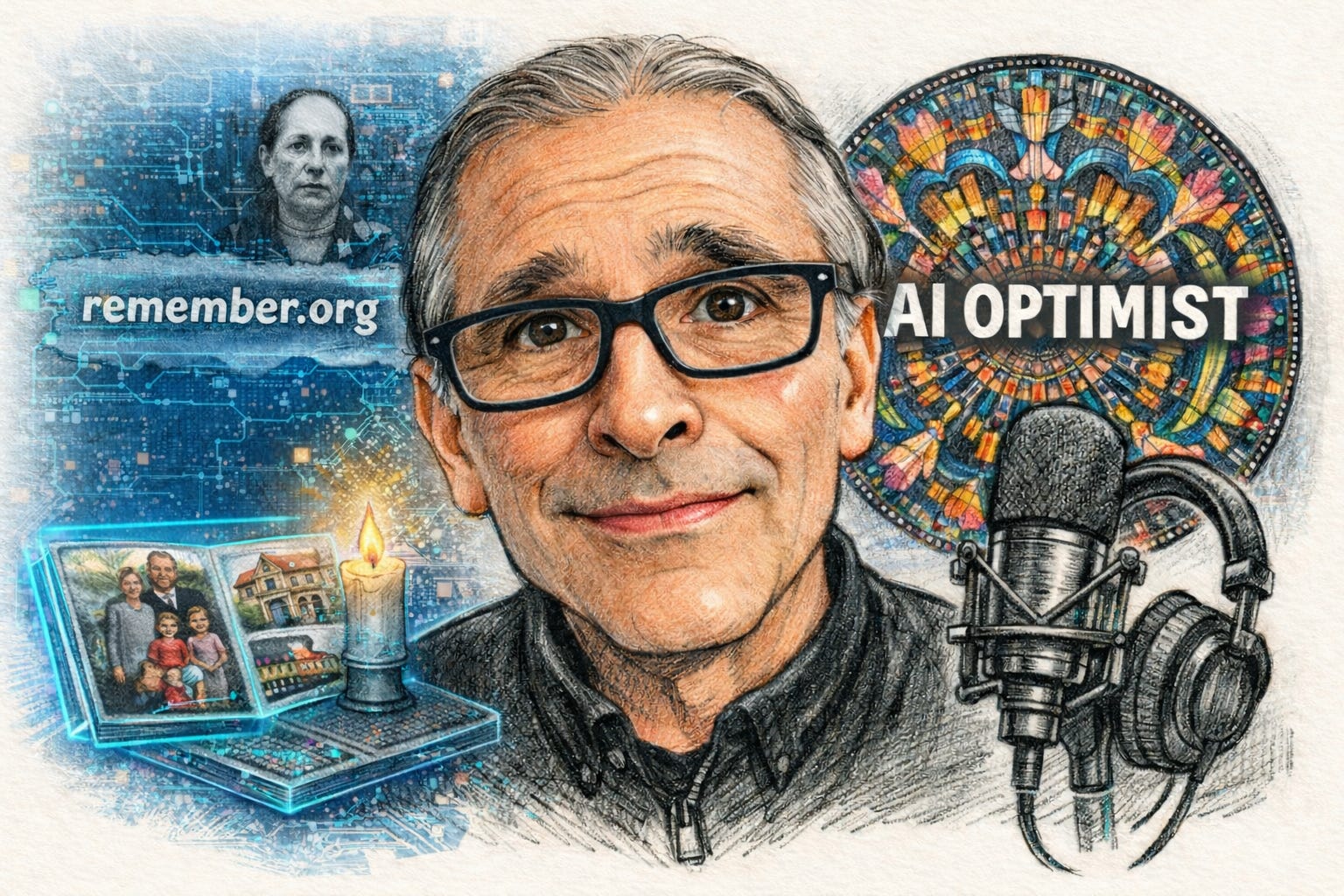
For 30 years, I’ve built Remember.org serving three generations of students. Millions and millions of visitors. Tens of thousands of schools using it, some for many years. Not famous. Not on any map.
Does it have value? To the people it reaches, yes. To the AI fame layer? No.
The work lives in how students encounter survivor stories. A student’s face when history stops being abstract and becomes a person who lived it. That’s not cloneable. I’m not chasing clonability. I’m not against AI clones either.
Remember.org is a community, a life form of thought and hope, remembering. Khaby is an influencer and performer, giving the audience what they want. The algorithm decides who sees it.
I give teachers and students agency. Not opinion. Personal experience from those who survived.
I create to connect, not to be famous. The fame layer is real. The money might be in the clone. But there’s another game worth playing.
Few if any get to play both. For me, I’m throwing away the map.
Khaby’s $1B Rise and Fall in a Week?
We’re watching Khaby’s experiment unfold. Will the $975 million happen? Does AI cloning help a brand or dilute it through overexposure? Is this the future of creative work or another hype cycle before the market corrects?
Nobody knows yet.
The headlines say one thing. The stock behavior suggests another. The outcome? We’re finding out together.
Meanwhile, the rest of us are building in our chosen territories. Some following maps. Some creating in wilderness. Most of us are somewhere in between, trying to figure out which game we’re playing.
Is Using GenAI Ethical? I Asked an Alien, a Monkey, and a First Grader (for a friend)

I feel like an alien using GenAI. Like a monkey trying to evolve.
Creativity as an AI Clone Deal
Is this what creativity becomes, a clone deal and a stock price?
I don’t think so. The map produces one kind of value. The wilderness produces another. The map highlights views, engagement, and measurable influence.
But it misses the specific, contextual, deeply human work that can’t be easily mapped. The voices that lead by example, not follower count.
The fame layer rewards viral success. Khaby follows that map, maybe to real money, maybe to paper promises. The rest of us contribute to training data. Some by choice, building in wilderness.
This isn’t a victim narrative. It’s a choice point.
Both paths are hard. Both matter. Only one promises big headlines.
But creativity has always lived in both territories: the mapped and the wild. The famous and the essential. Transaction driven and heart driven, it’s the same world.
The question isn’t whether you’d take $975 million. Or whether It’s real money or stock in a company that might make it. A billion-dollar prediction applied to a person who makes TikTok videos.
I hope Khaby gets paid. My payment is different: connecting with a community’s heart and soul wanting to remember, so their children never have to go through it again.